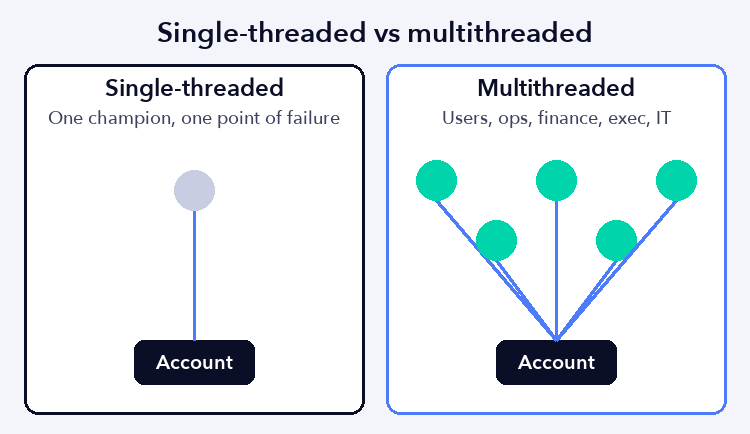
Multithreading in sales means building relationships with several stakeholders inside one account instead of relying on a single contact. Instead of one champion carrying the deal, you work with users, operations, finance, executives and other roles who each have a say in the purchase. It protects deals from stalling when one person goes quiet, changes jobs or lacks the power to say yes.
This guide explains how to map an account before you reach out, seven tactics to land meetings with more of the buying group, and what separates cold emails that get replies from the ones that get deleted. It draws on a Prolifiq webinar with sales leaders from Prolifiq and a field sales software company. Gong's research on multithreading points the same way: deals with more buyer contacts tend to win more often.
What multithreading in sales looks like
A single-threaded deal runs through one person. If that person leaves, gets overruled or loses interest, the deal ends. A multithreaded deal has several relationships, so the account keeps moving when any one of them goes cold. One panelist described a mistake from his early days as a business development rep: he found one or two stakeholders who loved the product and great discovery calls, handed them to the account executive, and watched deals stall in the pipeline anyway.
Multithreading is not about emailing everyone. It is about reaching the right roles in the order that matches how the company buys. That starts with understanding who is in the buying committee, and it matters most in a complex sale with many approvers.
Map the accounts and the buying group first
Good outreach starts with a clean list. Pick your priority accounts, then map who matters inside each one. A few practical steps from the panel:
- Rank accounts. Decide which accounts are most important now, which could become active deals later, and which can wait. Our account list builder guide shows one way to do it.
- Map your territory. Field reps can plot accounts on a map and plan visits around who is nearby. Inside reps can sequence calls by priority instead of geography.
- Learn how buyers buy. Panelists noted that approval paths have grown, often with 10 or more steps and ROI checks along the way. If you are not sure how your buyers evaluate software, ask your own CFO or sales leader how your company buys.
- Look at who already says yes. Pull the contacts attached to your last wins and meetings. Their roles tell you which personas to target next.
Then write the map down. A relationship map or a stakeholder map shows who you know, who you still need to reach and who holds the budget.
7 tactics to land meetings across the account
- Ask for referrals. Referrals, to new customers and inside the account, were the first tactic one panelist named. Customers often know other prospects, and an introduction is one of the fastest ways in. Build a process for asking and track the results.
- Earn internal help, then hand over the words. Your calls and outreach earn you a champion. Give that champion a strong point of view on why a colleague should talk to you, and consider ghostwriting the introduction email they can tweak.
- Follow your champions to new jobs. One team listed contacts tied to past opportunities, found 30 to 40 who had changed jobs through LinkedIn, and booked meetings with about 20% of them within a week or two. It is manual work, but those people already know the value. Tools can automate the tracking, and a calendar reminder 60 to 90 days after a start date works too.
- Use case studies and lookalikes. Take your customer case studies and research companies with similar traits, then use the story as the reason to reach out.
- Approach competitors' customers. If your team has battle cards, use them. A customer of a competitor may be curious whether better technology exists.
- Let AI read the 10-K. For public companies, ask an AI tool to summarize the annual report and the stated strategic goals, then shape your message around them. Our guide to AI for sales prospecting goes deeper, and buying signals in sales shows what else to watch for.
- Treat every new lead as an account. When one person raises a hand, research the other personas at that company and reach out across them. Interest exists somewhere in that organization.
Reps with local accounts can also show up in person with a note or small gift. Whatever the channel, a gift works best when it is selective, relevant and sent to the right stakeholder.

Cold email examples: what gets a reply
Executives can receive 20 to 50 prospecting emails a day, so most get deleted on sight. The webinar walked through real emails the panelists received. Three lessons stood out.
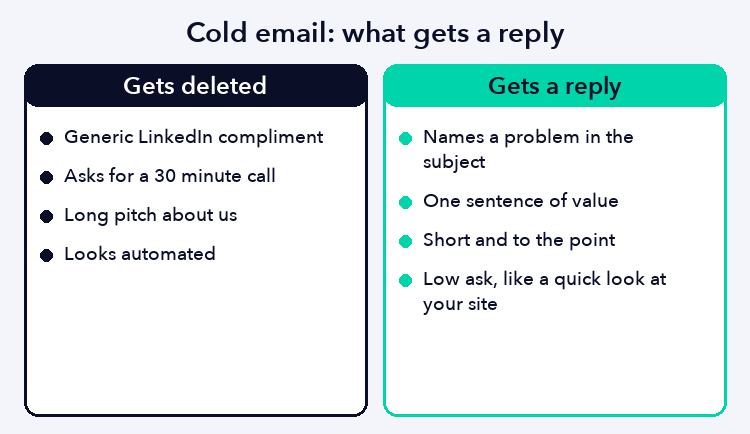
Shallow personalization fails. One email opened with the recipient's college from LinkedIn and asked if he made lifelong friends. It earned the open, then lost the reader because the pitch had nothing to do with a problem he had.
A named problem wins. An email that put a specific problem in the subject and body, tied to the recipient's ecosystem, got a reply because it matched something already on his mind. You can find that detail in 30 to 60 seconds by scanning a prospect's homepage for the industries and personas they sell to.
Keep the ask small. A creative email with a billboard joke caught attention and delivered its value in a sentence. The panelist said the better ask is a quick look at your website, not a 30 minute call. People will spend ten seconds looking, and if the pain is real they keep going.
Watch the full webinar to see the emails. For more templates, see our sales prospecting email examples.
Track multithreading in the account plan
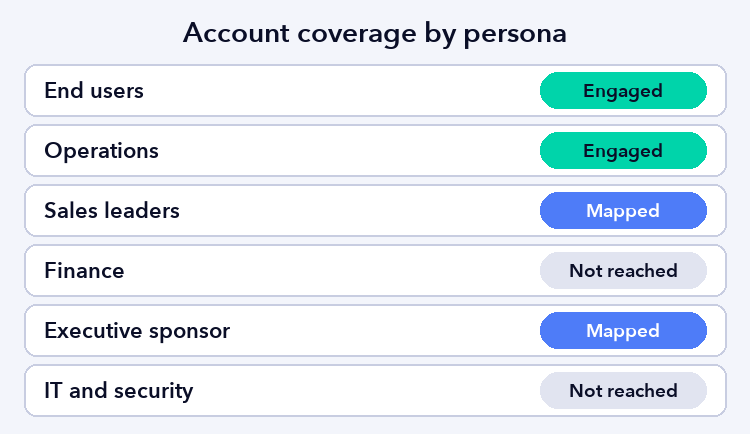
Multithreading only works if you can see it. List the personas that matter in each account and mark each one as not reached, mapped or engaged. Gaps show up fast, and the whole deal team can see where to push next. Record it in your account plan so it survives handoffs.
Teams that start earlier get more out of it. Account-based sales development builds this coverage before a deal exists.
Common multithreading mistakes
Relying on one champion. A friendly contact feels safe until that person changes jobs or cannot reach the budget owner.
Asking for too much too soon. A 30 minute call is a big ask from a stranger. Offer something smaller first.
Generic personalization. A fact from LinkedIn is not a reason to meet. Tie your message to a problem.
Skipping the grind. Manual work, like checking who changed jobs, does not scale, but it works and many teams skip it.
Not testing. No single email or tactic wins everywhere. Your industry, value proposition and buyers differ, so test, document and keep what works.
FAQ
What is multithreading in sales?
Multithreading in sales is building relationships with several stakeholders in the same account so a deal does not depend on one contact. It reduces the risk that a deal stalls when a champion goes quiet or leaves.
How many contacts should you engage in a deal?
There is no single number. Match your coverage to the buying group: users, the team lead, finance and an executive sponsor are common starting points, and larger deals need more. The goal is access to every role that can say no.
How do you multithread a deal?
Map the stakeholders, ask your champion for introductions, reach out to the roles you are missing with a message tied to their problem, and track coverage in the account plan.
What is the difference between multithreading and account-based selling?
Account-based selling focuses your effort on chosen accounts. Multithreading is one tactic inside it: reaching several people within those accounts.