A post-sales handoff is the transfer of a closed deal from the sales team to the customer success or implementation team. It passes along what the customer bought, why they bought it, who matters, and what was promised, so the customer does not have to repeat themselves.
The handoff is where a good sale can quietly turn into a bad first impression. This guide gives you a post sales handoff template you can copy, the five-step process behind it, and how the sales to implementation handoff differs from the sales to customer success handoff.
Why Post-Sales Handoffs Fail
Most handoffs fail for the same reasons, and none of them are about effort. Sales knows things that never reach the CRM: the real reason the buyer chose you, which executive pushed the deal, what was promised in the last call. When that stays in a rep's head or inbox, the customer success manager starts from zero.
- Context stays with the rep. Goals, concerns, and informal promises are not written down.
- Stakeholders are missing. Customer success meets the day-to-day user, not the executive who signed.
- Commitments are vague. "We will get you live fast" means different things to each team.
- There is no owner. Everyone assumes someone else sent the notes.
If you manage the teams involved, what is account management explains where the account owner picks up, and account manager vs account executive shows where the roles split.
Post Sales Handoff Template: What to Include
Copy the sections below into your CRM or a shared document. Fill every field before the handoff meeting, and mark any gap as unknown instead of leaving it blank.
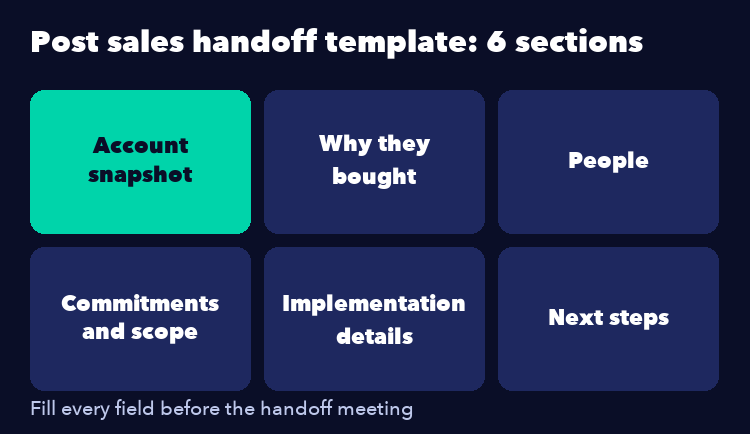
1. Account snapshot
- Customer name, industry, size, and the products or plan they bought
- Contract value, term, start date, and renewal date
- Link to the signed contract and the opportunity record
2. Why they bought
- The business problem they wanted to solve, in their words
- Success criteria: what must be true in 90 days for this to be a win
- Alternatives they considered and why they chose you
3. People
- Economic buyer, executive sponsor, champion, and day-to-day users
- Any known detractors or concerns, and who owns each relationship
- Preferred communication style and meeting cadence
A current stakeholder map or relationship map covers this section best, because it shows who matters and how strong each relationship is. If the deal had an executive sponsor, name them here so customer success knows who to keep warm.
4. Commitments and scope
- Everything promised in writing, plus anything promised verbally
- Custom terms, discounts, or concessions
- Dates the customer is counting on
5. Implementation details
- Integrations, data migration, security or legal requirements
- Customer-side owners and their availability
- Known risks and dependencies
6. Next steps
- Date of the joint handoff meeting and the kickoff call
- Owner for each action, with a due date
- First 30, 60, and 90 day goals

The 5-Step Sales to Customer Success Handoff Process
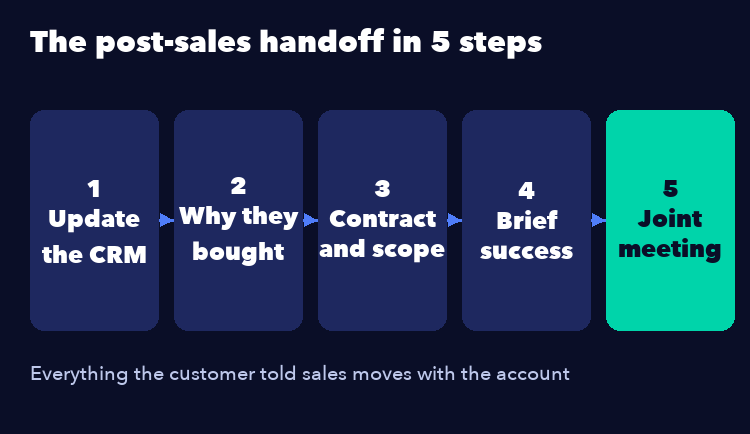
- Update the CRM. Move the account from opportunity to customer, attach the signed contract, and record key background details.
- Capture why they bought. Write down the customer's goals, success criteria, and the people who matter, including champions and detractors.
- Document the contract and scope. Note the plan, special terms, integrations, and dates, plus how the customer prefers to communicate.
- Brief customer success. Share the materials with the customer success or implementation team in the tool they already use.
- Hold a joint handoff meeting. Bring sales, the account owner, and customer success together to agree on goals, timelines, and next steps. For larger deals, introduce the customer to the new owner on the same call.
The Customer Success Collective publishes a similar framework if you want a second view, and Process Street has a longer, more granular checklist. Whatever you use, send the introduction straight after signature, while the deal is still fresh.
Sales to Implementation Handoff: What Changes
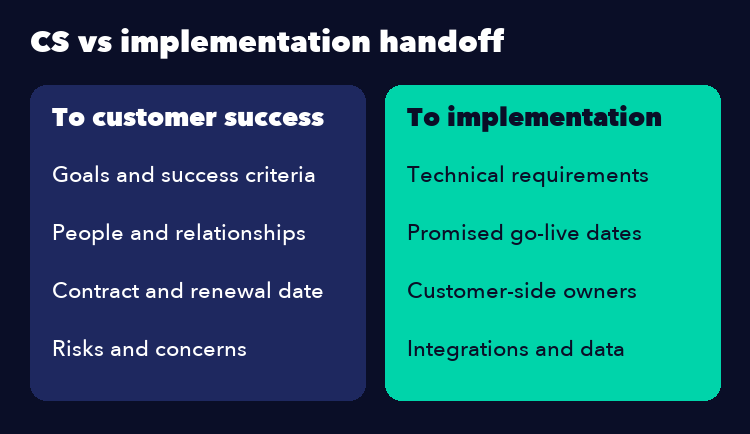
If your product needs a technical rollout, the sales to implementation handoff comes before, or alongside, the customer success handoff. Implementation teams need different detail:
- Technical requirements: systems, integrations, data volumes, and security reviews.
- Timeline commitments: any go-live date promised during the sale.
- Customer-side owners: who will be available, and when.
- Risks: anything sales learned that could slow the rollout.
Keep one shared record so the two handoffs do not contradict each other. Our customer onboarding playbook covers what happens next, and a customer success plan turns the handoff notes into goals and owners.
How to Measure a Good Handoff
- Handoff completeness: the share of closed deals with every template field filled.
- Time to handoff: days from signature to the handoff meeting.
- Time to first value: days until the customer reaches the first success criterion.
- Early churn and escalations: accounts that raise a serious issue in the first 90 days.
- Customer feedback: a short check after the first 30 days asking whether they had to repeat themselves.
Review these with the customer health score so early warning signs reach the team before the first renewal conversation.
Frequently Asked Questions
What is a post-sales handoff?
It is the transfer of a closed deal from sales to the team that will onboard and support the customer, including what was sold, why, who matters, and what was promised.
What should a sales to customer success handoff template include?
An account snapshot, why the customer bought, the key people, commitments and scope, implementation details, and next steps with owners and dates.
Who is responsible for the handoff?
The account executive or sales owner starts it and is accountable for completeness. Customer success or implementation confirms they have what they need.
When should the handoff happen?
As soon as the deal is signed. Send the written summary the same day and hold the joint meeting within a week.
What is the difference between a sales handoff and an implementation handoff?
A sales to customer success handoff covers the relationship and goals. A sales to implementation handoff adds the technical requirements, timelines, and customer-side owners needed to deploy.
Should the customer be on the handoff meeting?
For larger or more complex deals, yes. A joint introduction shows the customer that the teams are aligned and gives them a named contact.
A handoff works best when the account plan and relationship map already exist before the deal closes. Prolifiq is Salesforce-native, so the plan built during the sale carries straight to the team that owns the customer.